


What Is Far-UVC, and Why Is Hyundai Exploring It for Future Vehicles?
Far-UVC is a short-wavelength form of ultraviolet light that Hyundai Motor and Kia are researching for future in-vehicle cabin sanitization. Hyundai Motor and Kia recently unveiled Plasma Care UVC, a research and development technology that uses Far-UVC light to help sanitize a vehicle cabin environment and reduce odor-causing microorganisms.¹
The important detail for shoppers is timing: Plasma Care UVC is not currently available in production vehicles. Any future use remains subject to additional testing, validation, engineering development, and applicable legal, regulatory, and certification requirements. Even so, it gives Hyundai drivers and future Hyundai shoppers a useful look at where vehicle technology may be headed.
What Is Far-UVC?
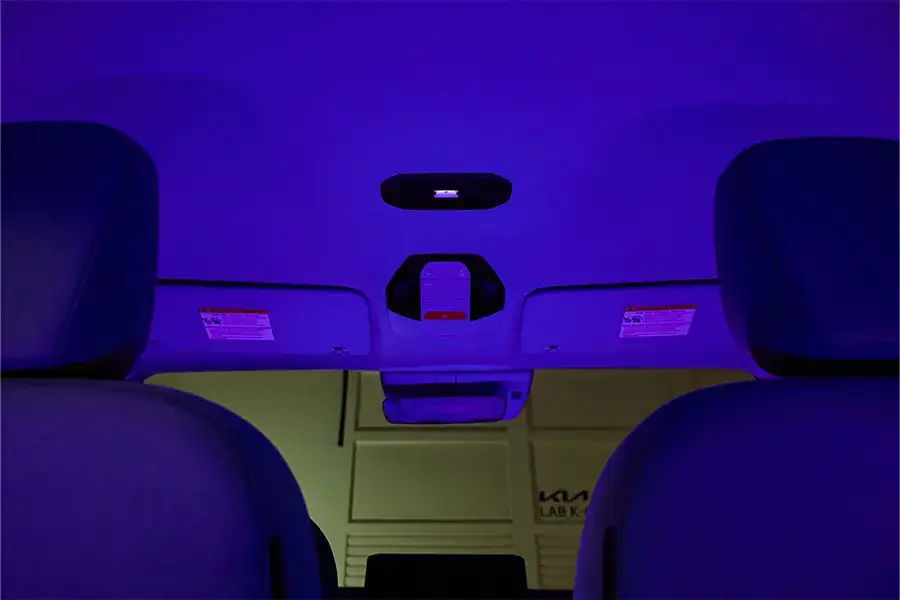
Far-UVC is a type of ultraviolet light that falls within the 200–230 nanometer wavelength range. Hyundai Motor and Kia describe this wavelength as different from conventional UVC light, which is often used in enclosed sterilization products but can be harmful with direct exposure to skin and eyes.
The goal behind Far-UVC research is to use a controlled wavelength with sanitizing potential while limiting deeper penetration into human skin. Hyundai Motor and Kia explain that Far-UVC is designed to remain on the outer keratin layer of human skin, while bacteria and viruses do not have the same protective barrier.
In plain English, Hyundai Motor and Kia are exploring whether a carefully controlled form of ultraviolet light can help treat the cabin environment without requiring the vehicle to be empty.
What Makes Hyundai Plasma Care UVC Different?
Hyundai Plasma Care UVC is an in-vehicle approach to Far-UVC sanitization. Instead of relying on a conventional LED setup, the system uses a compact plasma-based light source designed to generate Far-UVC wavelengths.
That matters because a vehicle cabin is a challenging place for this kind of technology. A car interior is smaller than a classroom or hospital room, passengers sit close to the light source, and the vehicle contains many electronic components. The system also needs to handle real driving conditions, including vibration, temperature changes, and regular day-to-day use.
Hyundai Motor and Kia addressed those challenges by focusing on several key areas:
- A plasma lamp designed to generate Far-UVC light in the 200–230 nm range
- A compact layout intended for in-vehicle integration
- Improved power efficiency compared with systems used in larger indoor spaces
- Durability for the vibration and temperature demands of automotive use
- Optical filtering intended to help control the emitted wavelength
That combination shows how Hyundai is thinking beyond a lab concept. For a technology like this to make sense in a future vehicle, it has to work with the realities of daily driving.
Why Would Far-UVC Matter in a Vehicle Cabin?
Drivers spend a lot of time in their vehicles, especially around Greater Boston. A daily routine might include a commute toward Boston, errands around University Ave, school pickup, gym bags, takeout, pets, sports gear, and weekend plans.
Cabin freshness is not just a luxury detail when a vehicle serves as a commuter space, family hauler, and errand runner all in the same week. Hyundai Plasma Care UVC is being explored as a way to help reduce bacteria and odor-causing microorganisms inside the cabin. Hyundai Motor and Kia say the technology can target microorganisms that contribute to unpleasant odors as they proliferate, helping support a more pleasant cabin environment.
That does not mean the technology replaces regular cleaning, responsible hygiene, cabin air filter maintenance, or smart vehicle care. It does suggest that future vehicles may take a more active role in supporting a cleaner-feeling interior.
How Did Hyundai Test Plasma Care UVC?
Hyundai Motor reported testing Plasma Care UVC in several settings, from component-level evaluations to full-vehicle testing.
In a controlled chamber test simulating a vehicle cabin environment, the system showed a 96.8 percent reduction in airborne viruses within 30 minutes under the tested conditions. In component-level testing, exposure to Far-UVC light through Plasma Care UVC showed a 99.9 percent eradication rate for pneumonia-causing bacteria after 30 seconds under the tested conditions, with complete eradication after 60 seconds. In a real-vehicle evaluation using a Kia PV5, testing showed 99.9 percent eradication of E. coli after 40 minutes of irradiation under the tested conditions.²
Those results are promising, but they should be understood as research and validation results, not as a customer-available Hyundai feature. Hyundai Motor and Kia stated that they will continue rigorous technical validation in line with international safety standards before any production implementation.
Why Is Hyundai Exploring Cabin Sanitization Now?
Vehicle technology has moved well beyond horsepower, screen size, and speaker count. Modern shoppers also care about comfort, convenience, air quality, driver-assist technology, quietness, materials, and how easy a vehicle is to live with every day.
Far-UVC research fits into that broader shift. As vehicles become more connected, more shared, and more purpose-built, the cabin experience becomes even more important. Hyundai Motor and Kia highlighted potential future uses for Plasma Care UVC in purpose-built vehicles, including mobility scenarios such as children’s shuttles and commercial-style vehicles.
That future-focused thinking matters because the way people use vehicles continues to change. Families, commuters, business owners, and passengers may all benefit from cabins that are designed to feel cleaner, fresher, and more supportive of daily life.
What Does This Mean for Hyundai Shoppers Today?
Plasma Care UVC is not a feature you can buy in a new Hyundai right now. It should not be confused with current Hyundai comfort, climate, air filtration, or technology features. Instead, it is a look at how Hyundai’s research teams are thinking about the next stage of mobility.
For today’s shoppers, the takeaway is simpler: Hyundai continues to explore technology that supports real-life ownership. That includes not only performance and design, but also comfort, cleanliness, convenience, and passenger confidence.
Drivers comparing Hyundai models at Nucar Hyundai of Norwood can focus on the features available today, including cabin comfort, infotainment, driver-assist technology, seating flexibility, cargo space, and hybrid or electric options where available. A test drive is still the best way to see how a Hyundai fits your daily routine from our Providence Highway showroom.
Far-UVC and Hyundai Plasma Care UVC FAQs
Is Hyundai Plasma Care UVC available in vehicles now?
Not yet. Plasma Care UVC is a research and development technology and is not currently available in production vehicles.
What does Far-UVC mean?
Far-UVC refers to ultraviolet C light in the 200–230 nanometer wavelength range. Hyundai Motor and Kia are researching this wavelength range for future in-vehicle cabin sanitization because of its potential to help treat occupied cabin environments.
Why is Hyundai researching Far-UVC for vehicle cabins?
Hyundai Motor and Kia are exploring Far-UVC as a future cabin hygiene technology that may help reduce bacteria and odor-causing microorganisms. The goal is to support a more pleasant cabin environment in future mobility scenarios.
Does Plasma Care UVC replace cleaning a vehicle interior?
No. Plasma Care UVC should not be treated as a replacement for normal cleaning, cabin care, responsible hygiene, or maintenance. It is a future-focused technology under development, not a current production feature.
Hyundai Innovation Keeps Looking Ahead
Far-UVC may sound technical, but the idea behind Hyundai’s Plasma Care UVC research is easy to understand: future vehicles could do more to help keep the cabin environment fresh and pleasant. As Hyundai continues developing advanced mobility technology, shoppers can expect the brand to keep looking for practical ways to make time behind the wheel more comfortable and more confidence-inspiring.
Nucar Hyundai of Norwood is here to help drivers explore the Hyundai technology available today while keeping an eye on what may come next. Visit us to compare current Hyundai models, ask questions, schedule a test drive, and see why Everyone Loves A Nucar.
0 comment(s) so far on What Is Far-UVC, and Why Is Hyundai Exploring It for Future Vehicles?